
-
 About LiM
LiM Laser is committed to providing global customers with advanced additive manufacturing equipment, supporting auxiliary equipment and 3D printing services.
-
 Products
Radium Laser has independently developed LiM-X series of selective laser melting equipment, LiM-S series of coaxial powder feeding equipment, LiM-R series of laser cladding equipment and customized equipment for special industries.
-
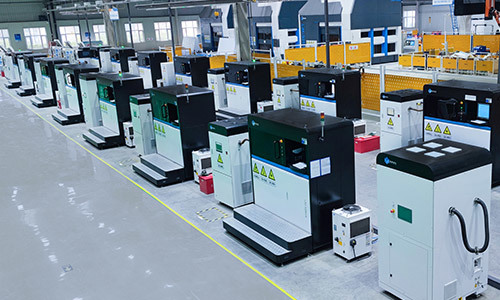 Solution
Radium Laser provides differentiated metal 3D printing solutions for different industries, focusing on user needs and continuing to create greater value for users.
-
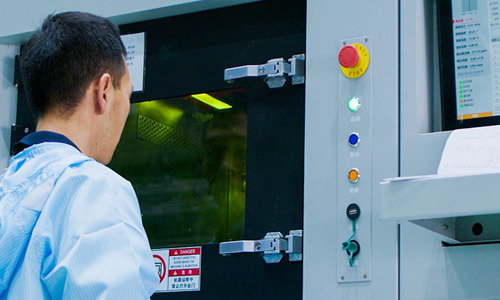 Service Support
Radium laser with a professional team, rapid response, efficient service to provide users with applications and technical support services.
-
 News
NewsRadium bright laser at any time access to the latest information -- enterprise development, honor information, the latest achievements such.
-
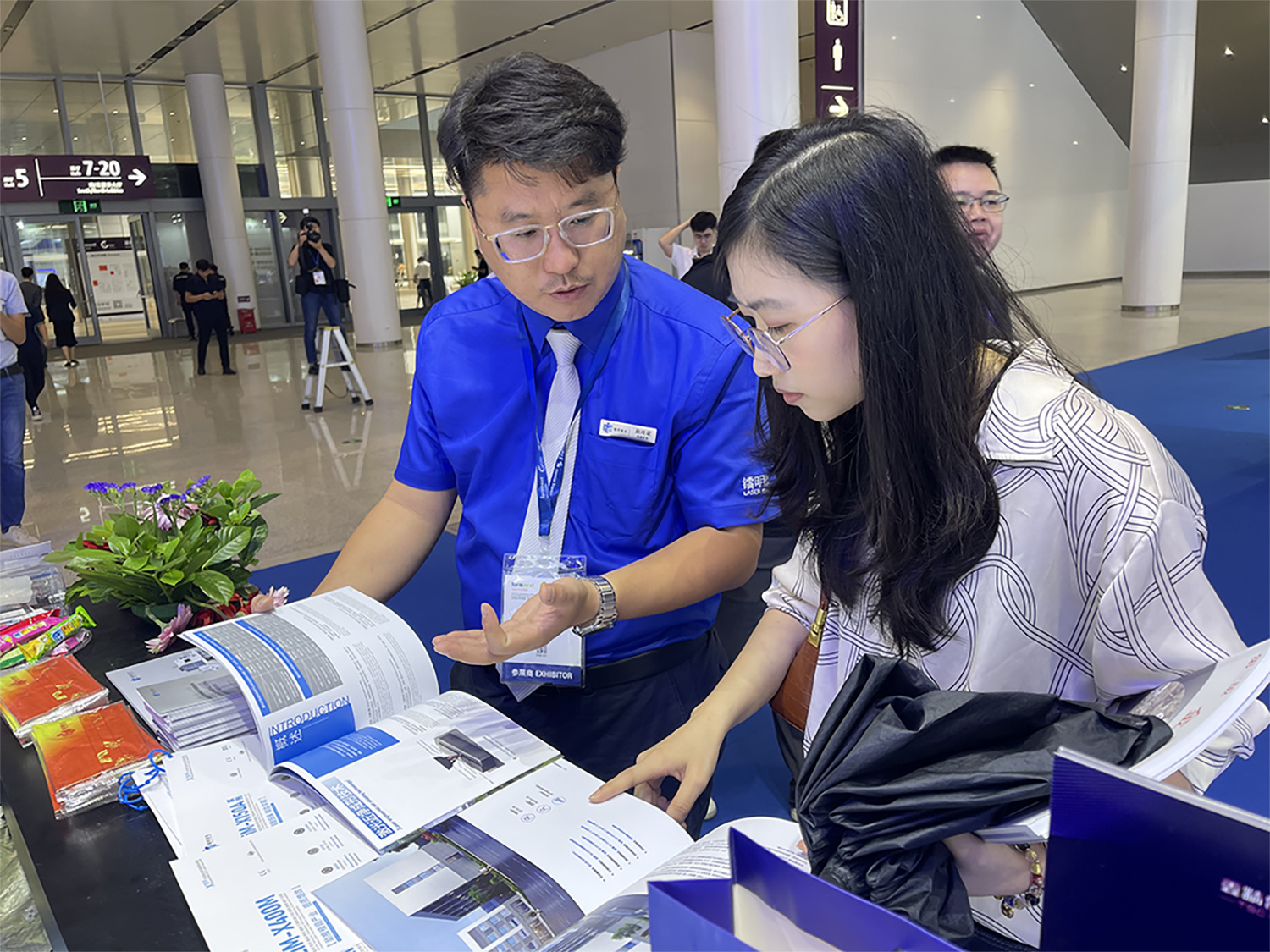 Marketing Dynamics
Focus on the industry event and share details of various activities of radium LiM Laser!
-
 Contact Us
Welcome to contact us for more information Tel: 86-022-27914042 18622468793

Real-time Monitoring Enables High-Quality Manufacturing
Author:
Time:2025-12-24
In the current wave of intelligent manufacturing sweeping the globe, metal 3D printing technology is reshaping the manufacturing landscape with its unique advantages, undertaking the crucial task of prototyping and mass production of key components in high-end manufacturing fields such as aerospace, energy, and automotive manufacturing. These components are typically characterized by large size, complex structure, and high precision requirements, while also having long forming cycles and high manufacturing costs. Therefore, quality control during the printing process is particularly important.
Based on its extensive equipment R&D and practical experience, LiM Laser has innovatively launched a powder bed monitoring system and a melt pool monitoring system. These two systems work together to monitor, intervene, and trace quality through intelligent means, providing high-precision quality assurance throughout the entire metal 3D printing process, effectively improving production efficiency and reducing production costs.
Powder Bed Monitoring System: Strictly Controlling the First Stage of Printing
The powder bed stage is a crucial foundation of the metal 3D printing process, and its quality directly determines the quality, performance, and success rate of the printed workpiece. However, during continuous printing, issues such as toner shedding/pilling, insufficient toner distribution, part lifting, and toner bed scratching can easily occur, resulting in defects such as incomplete fusion, excessive remelting, parts colliding with the squeegee, and sintering black spots. These defects can even cause printing interruptions, affecting print quality.
To address toner distribution defects, LiM Laser has launched a toner bed monitoring system with production-ready detection logic. Relying on visual inspection technology, it achieves real-time toner distribution quality monitoring, automatically replenishing toner and issuing alarms for abnormal toner distribution.
The system has a built-in high-definition camera. After each toner distribution and melting process, professional equipment quickly captures images of the toner bed. The system rapidly inspects for defects in thousands of layers of printing, without affecting printing speed.
Through algorithmic analysis and comparison, the system obtains information on the toner distribution status and printed area, providing real-time feedback. Simultaneously, it adjusts detection thresholds to set warning/stop areas and the number of defects. The system automatically marks defects and triggers intelligent processing solutions for targeted handling.

The system allows users to customize the number of layers to skip during detection, preventing incomplete powder coverage from affecting test results. It also allows setting detection warnings and shutdown parameters; if a defect exceeds the alarm threshold, a shutdown is triggered; otherwise, the defect location and type are identified, providing an early warning.
During printing, the system retains test results and original images after each layer's powder application and scanning, allowing for quick searching within the system. It displays and labels defect types in images, and allows for zooming in to observe details. Different defect types are labeled separately, and searches can be performed by time, enabling traceability of the powder application status for each layer of the part.
The powder bed monitoring system not only monitors powder application quality but also intelligently replenishes powder and triggers alarms when abnormalities are detected, ensuring uniform and stable powder application during printing and further improving part forming quality.
Molten Pool Monitoring System: A Quality Traceability "Black Box"
To address printing defects such as spatter, spheroidization, porosity, poor surface quality, cracks, and geometric deformation, LiM Laser employs a molten pool monitoring system for real-time monitoring, providing strong support for high-quality printing.
The molten pool monitoring system is primarily used for real-time monitoring, analysis, and evaluation of molten pool information in laser selective melting (SSM) equipment. This is a crucial resource for process development, quality traceability, and defect analysis.
The molten pool monitoring system uses coaxial sensors to monitor molten pool status data in real time during the printing process. Through benchmark values and adaptive algorithms, it diagnoses the process status in real time and displays abnormal areas in the printed parts, thereby enabling defect detection and quality traceability.

The LiM-X400M+ equipment equipped with the molten pool monitoring system
This system has three core functions:
Real-time monitoring: Real-time monitoring of laser energy, reflected laser energy, metal vapor, and molten pool light radiation during printing, capturing real-time molten pool status data and displaying it through 2D and 3D interfaces.

Offline analysis: Refined analysis of historical data to generate quality reports, facilitating quality traceability and defect location.

Feature analysis: Analysis of the mapping relationship between process parameters, molten pool status, and signal characteristics for evaluating the process status.

The molten pool monitoring system serves two main purposes: firstly, it detects molten pool instability in real time; secondly, it acts as a quantitative indicator for process strategy optimization, ensuring part quality and consistency. Furthermore, real-time monitoring is fundamental to closed-loop control and intelligent operation of the metal 3D printing process. This system has been proven in practice, not only solving the challenges of observation and monitoring during printing but also contributing to improved process stability and enhanced print quality reliability.
Dual Systems Working Together: Building Double Insurance for Quality Protection
LiM Laser's powder bed monitoring system and molten pool monitoring system together form a double protective barrier for metal 3D printing quality. These two systems work collaboratively, covering the entire process from powder spreading to melting to forming.
Currently, both systems are optional on the LiM-X series laser selective melting equipment, providing users with a more efficient and intelligent overall solution for metal 3D printing.
As a significant force in the field of metal additive manufacturing, LiM Laser continuously explores technological breakthroughs and industrial applications, expanding from single services to a full-chain layout. In the future, we will explore optimization and upgrading paths for each stage of metal 3D printing with more advanced technologies and smarter solutions, providing users with more efficient and intelligent overall metal 3D printing solutions and injecting strong momentum into the transformation and upgrading of the manufacturing industry.
Related Articles
Market Activity

