
-
 About LiM
LiM Laser is committed to providing global customers with advanced additive manufacturing equipment, supporting auxiliary equipment and 3D printing services.
-
 Products
Radium Laser has independently developed LiM-X series of selective laser melting equipment, LiM-S series of coaxial powder feeding equipment, LiM-R series of laser cladding equipment and customized equipment for special industries.
-
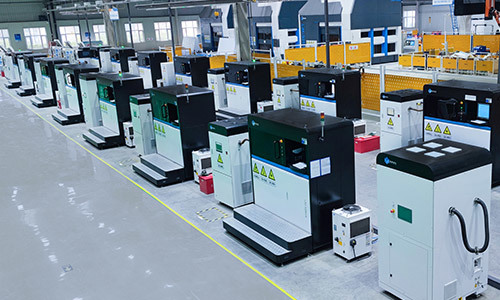 Solution
Radium Laser provides differentiated metal 3D printing solutions for different industries, focusing on user needs and continuing to create greater value for users.
-
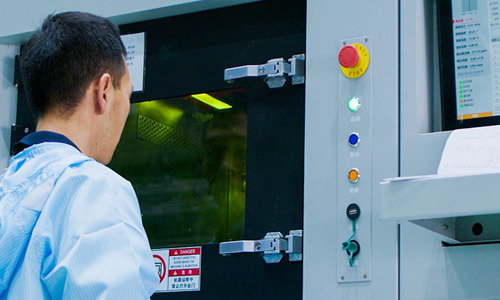 Service Support
Radium laser with a professional team, rapid response, efficient service to provide users with applications and technical support services.
-
 News
NewsRadium bright laser at any time access to the latest information -- enterprise development, honor information, the latest achievements such.
-
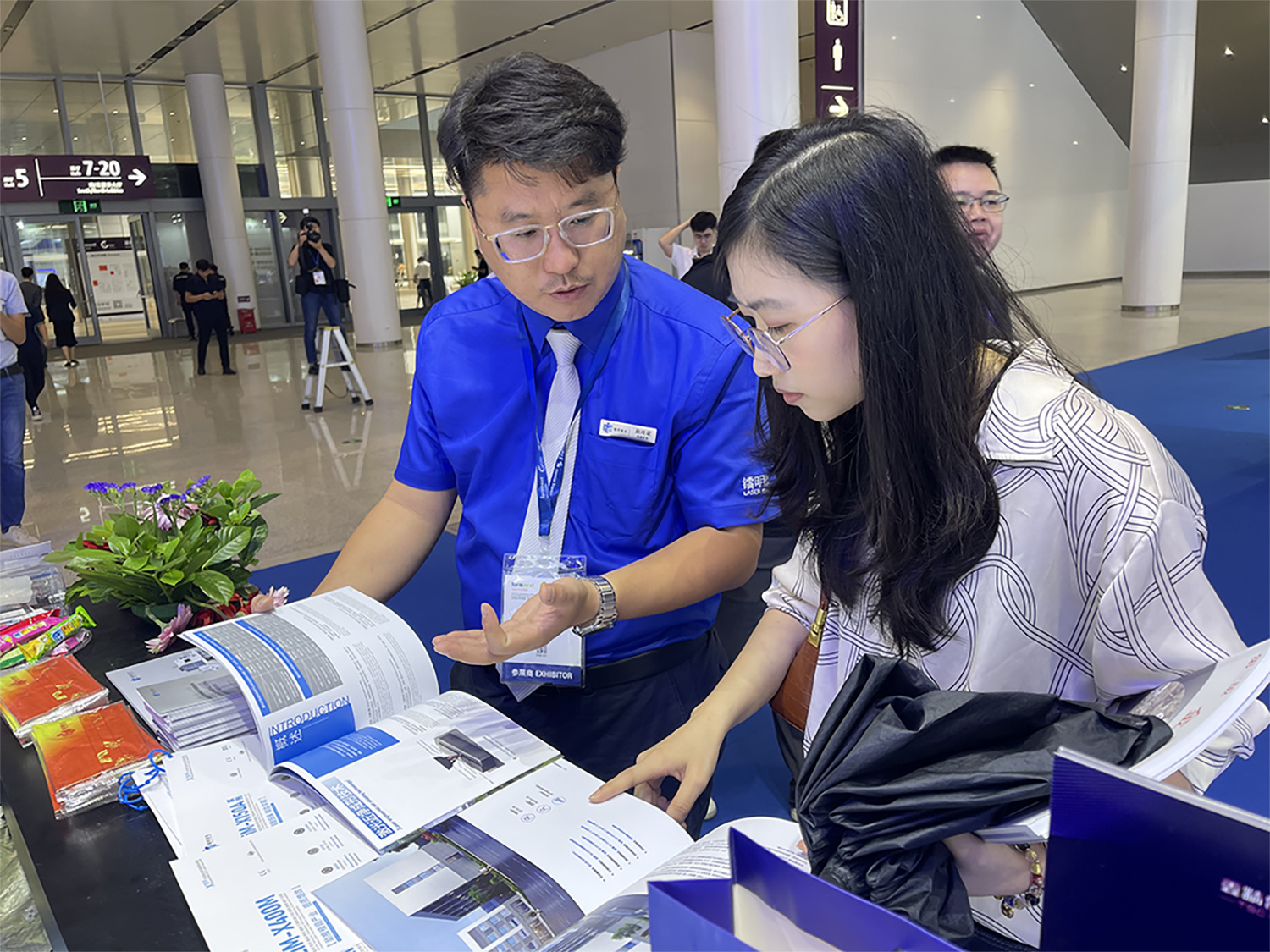 Marketing Dynamics
Focus on the industry event and share details of various activities of radium LiM Laser!
-
 Contact Us
Welcome to contact us for more information Tel: 86-022-27914042 18622468793
Empowering High-Performance Lightweight Component Manufacturing with Additive Manufacturing Mining
Author:
Time:2025-11-10
In aerospace, automotive manufacturing, and other fields, lightweight design is a key factor in improving product performance, reducing energy consumption, and enhancing competitiveness. With the rapid development of metal 3D printing technology, rethinking and optimizing component structures from an additive manufacturing perspective has become an important path to achieving lightweight, high-efficiency, and high-reliability products. LiM Laser, leveraging its deep technological expertise and industry experience, utilizes topology optimization and lattice structure techniques to help users achieve their component weight reduction goals.
Topology Optimization Design
Topology optimization is a structural design method that uses mathematical methods to calculate the optimal material distribution, enabling greater design freedom and a larger design space. Combining metal 3D printing technology with topology optimization not only reduces the difficulty of component processing but also minimizes material usage while meeting mechanical performance requirements, thus achieving weight reduction goals.

Dimensions: 420mm × 90mm × 70mm
Material: Titanium Alloy (TC4)
This part is a typical topology-optimized component printed by the LiM-X400 equipment. Compared with the solid structure design, the weight is significantly reduced, and the mechanical properties and structural utilization are significantly improved, fully demonstrating the technical advantages of "topology optimization + 3D printing".
BCC Lattice Structure
In addition, adding a BCC lattice structure is also a commonly used lightweighting method. Taking a satellite support manufactured by LiM Laser as an example, the part's interior is filled with microstructures to achieve a lightweight design, reducing weight by more than 40% while ensuring performance requirements. This type of process and structure has passed various verifications and has formed a complete set of process specifications.

Satellite Support (Partial View)
The phase change energy storage device involved in the manufacturing adopts a three-dimensional lattice + thin-walled skin structure design. The skin thickness is only 0.5mm, and the lattice structure rod diameter is 0.5mm. Deformation is easily caused during processing, and the interior is a closed cavity with a complex lattice, which cannot be achieved by traditional manufacturing processes. Utilizing direct metal 3D printing, the product boasts high dimensional accuracy, achieving a 40% weight reduction while shortening the production cycle by 60%. Currently, this part has passed aerospace process certification and is entering application phases.

Stereoscopic Lattice + Thin-Wall Skin Structure
Topology Optimization + BCC Lattice Structure
In practical applications, topology optimization combined with BCC lattice infill is often used to optimize component design. While ensuring the structural strength and stiffness of critical components, material is removed from non-critical areas, and lower-stress solid parts in the topology are replaced with lower-density lattice structures, thereby further reducing weight while maintaining component performance.
Taking a high-temperature tail rudder product printed with LiM Laser as an example, this component employs a composite structure design of a tereoscopic skeleton + lattice + thin-wall skin. First, topology optimization is used for geometric reconstruction to determine the load-bearing solid skeleton; then, based on the optimized morphology, BCC lattice is extensively filled into non-load-bearing or low-load-bearing areas, ensuring the product meets lightweight requirements while maintaining good mechanical properties and overall connection stability.

A partial view of a high-temperature tail rudder.
Furthermore, a certain type of aerodynamic rudder part printed by LiM Laser features a typical thin-walled sandwich structure. Using a "skeleton + skin" approach, it ensures structural strength and performance, reducing weight by over 40%. Manufactured using metal 3D printing technology, the finished product exhibits excellent surface quality and dimensional accuracy, and its structural stability meets design requirements.

Currently, the application of metal additive manufacturing technology is becoming increasingly widespread. A design-first additive manufacturing approach has led the development and manufacturing of key components, becoming the mainstream direction for various industries. LiM Laser has been deeply involved in the field of metal additive manufacturing for many years, continuously breaking through the limitations of traditional processes. With new processes, technologies, and equipment, it provides users with crucial support and innovative impetus, helping users in more fields overcome manufacturing bottlenecks and accelerate development and transformation.
Related Articles
Market Activity

