

-
 About LiM
LiM Laser is committed to providing global customers with advanced additive manufacturing equipment, supporting auxiliary equipment and 3D printing services.
-
 Products
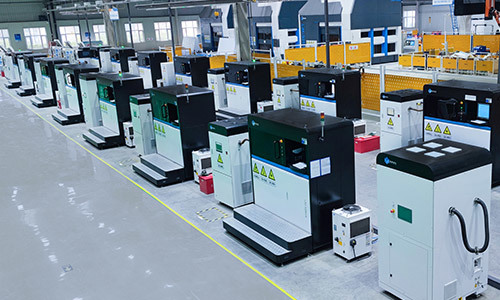
Radium Laser has independently developed LiM-X series of selective laser melting equipment, LiM-S series of coaxial powder feeding equipment, LiM-R series of laser cladding equipment and customized equipment for special industries.
-
 Solution
Radium Laser provides differentiated metal 3D printing solutions for different industries, focusing on user needs and continuing to create greater value for users.
-
 Service Support
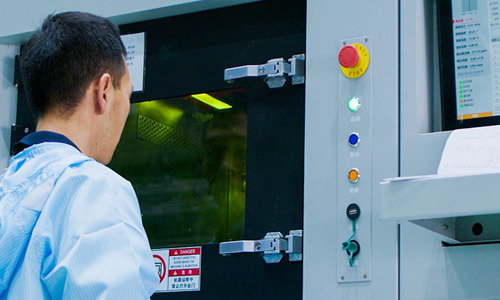
Radium laser with a professional team, rapid response, efficient service to provide users with applications and technical support services.
-
 News
NewsRadium bright laser at any time access to the latest information -- enterprise development, honor information, the latest achievements such.
-
 Marketing Dynamics
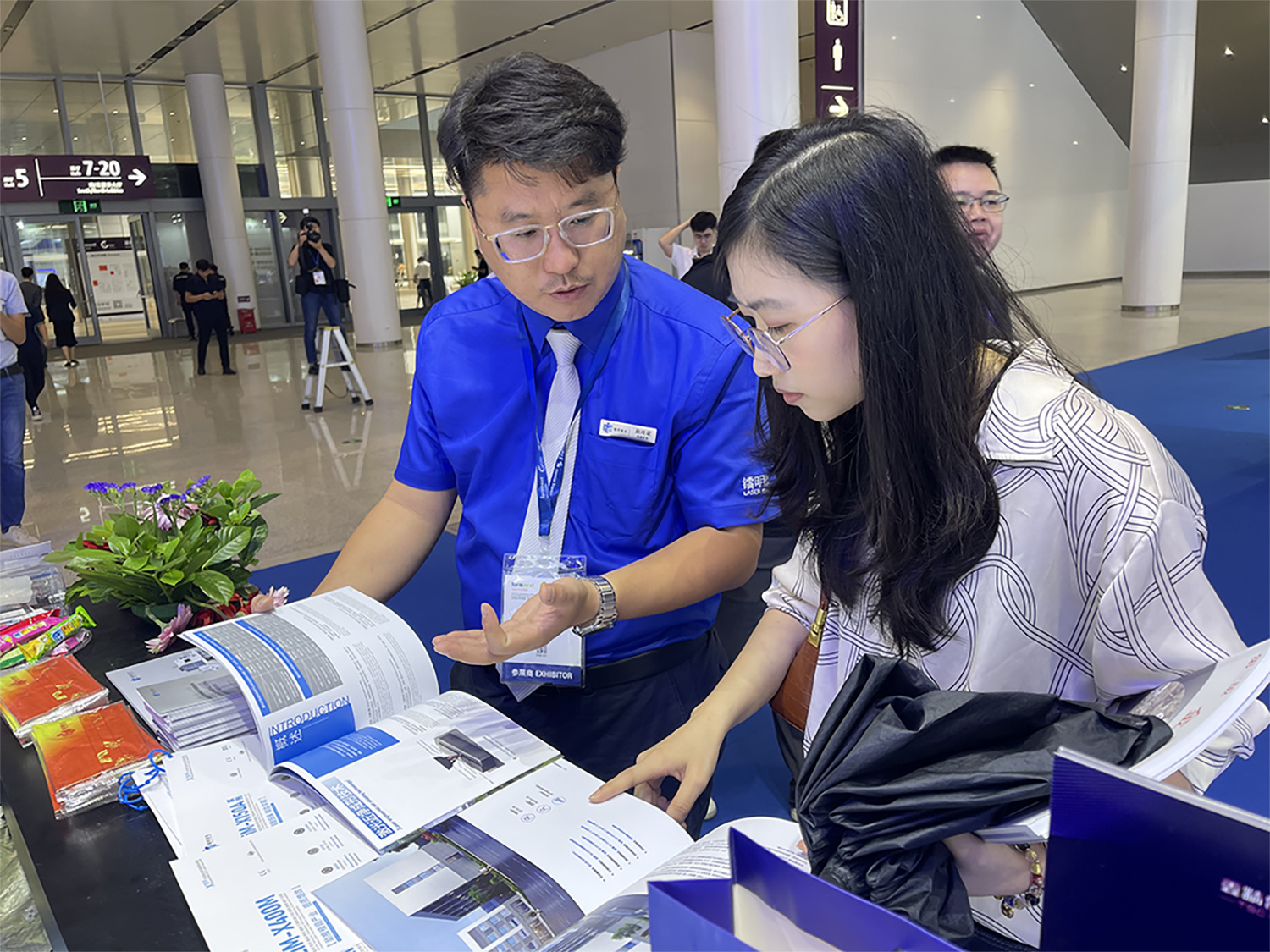
Focus on the industry event and share details of various activities of radium LiM Laser!
-
 Contact Us
Welcome to contact us for more information Tel: 86-022-27914042 18622468793
Significant Progress Made at Shenyang Ligong University in Enhancing the Mechanical Properties of 3D-Printed Honeycomb Structures
Author:
Time:2025-12-10
Honeycomb structures have long been highly valued for their lightweight and high-strength properties, making them an ideal choice for various engineering applications. Traditional hexagonal honeycomb designs have been widely used, leading to the development of various structural forms that meet specific mechanical requirements. However, with the increasing diversification of applications, there is a growing need for honeycomb structures capable of providing specific mechanical responses under different loading conditions.
To address this, Xu Mingyang's team at Shenyang Ligong University began focusing on new design methods, combining gradient strategies, bio-structures, and additive manufacturing to provide new insights into designing honeycomb structures with excellent mechanical properties or energy absorption capabilities.
The research team designed two biomimetic gradient circular honeycomb structures by mimicking the microstructure of bamboo wall cross-sections and the skeletal structure of bat wings: wall-inspired nested self-similar gradient honeycomb (WNSGH) and skeleton-inspired nested non-self-similar gradient honeycomb (SNNGH). They then investigated the in-plane compressive mechanical behavior of these two gradient honeycomb structures and a conventional circular honeycomb structure (RCH) under three loading velocities.

From left to right: 3D printed samples: RCH, WNSGH, and SNNGH

(a) Schematic diagrams of the geometric dimensions of three honeycomb structures: RCH, (b) WNSGH, and (c) SNNGH.
These three honeycomb structures each contain six layers in the plane. The gradient honeycomb structure is constructed by stacking units of different geometric configurations layer by layer from top to bottom, with each two layers forming a gradient level, ultimately forming a three-layer gradient honeycomb architecture.
The related research results, "Mechanical characteristics of additive manufactured biomimetic gradient circular honeycombs with nested strategy under static and dynamic loading," were published in the international mechanics journal *International Journal of Impact Engineering*, which had an impact factor of 5.1 in 2023.

Researchers also introduced the rib-reinforced microstructure of beetle elytra into traditional hexagonal honeycombs, combining the characteristics of multi-layer gradient structures to design two rib-reinforced gradient honeycomb structures: wall rib-reinforced gradient honeycomb (WRRGH) and vertex rib-reinforced gradient honeycomb (VRRGH). AlSi10Mg alloy gradient honeycomb structure specimens were fabricated using selective laser melting (SLM) technology. The in-plane mechanical properties and energy absorption capacity of these two gradient honeycomb structures, along with a homogeneous hexagonal honeycomb structure, were investigated at three strain rates (10⁻³ s⁻¹, 220 s⁻¹, and 1500 s⁻¹).

Gradient honeycomb specimens fabricated by 3D printing and selective laser melting (SLM): (a) Printing direction; (b) Fabrication process; (c) Formed specimen.
The specific energy absorption (SEA) of both gradient honeycomb structures was greater than that of the homogeneous honeycomb at all three strain rates. This study provides a new perspective for designing multilayer gradient honeycomb structures with excellent mechanical properties and impact resistance. The research findings, "Mechanical properties of additively manufactured AlSi10Mg alloy gradient honeycomb with rib reinforcement at different strain rates," were published in Thin-Walled Structures, with an impact factor of 5.7 in 2023.

LiM Laser provided the LiM-X260A equipment to support this effort, helping the research team successfully fabricate experimental prototypes of AlSi10Mg alloy gradient honeycomb structures that met the requirements, laying a crucial foundation for subsequent research.

The LiM-X series SLM equipment, with its high stability and high printing quality, has assisted users such as the Hong Kong University of Science and Technology, Hebei University of Technology, Xi'an University of Technology, Hebei University of Science and Technology, Beijing Institute of Technology, China University of Geosciences (Wuhan), Sichuan Engineering Vocational College, and Guangdong Light Industry Vocational College in their research, education, and talent cultivation.
Equipment capability equates to research capability. LiM Laser has consistently focused on the core needs of educational and research users, fully leveraging the advantages of metal 3D printing technology to support universities and research institutions in their continuous exploration and research achievements. In the future, we will continue to leverage our industry advantages, continuously upgrading our equipment design, manufacturing, and professional services, promoting production through research, and persistently striving for excellence to provide more educational and research users with comprehensive metal 3D printing solutions.
Previous article
Related Articles
Market Activity

