

-
 About LiM
LiM Laser is committed to providing global customers with advanced additive manufacturing equipment, supporting auxiliary equipment and 3D printing services.
-
 Products
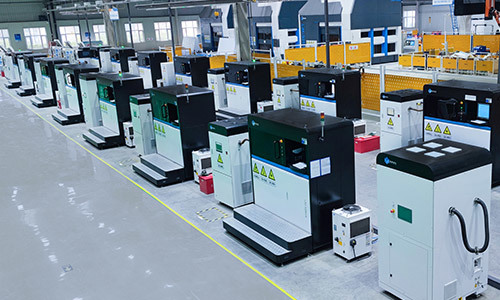
Radium Laser has independently developed LiM-X series of selective laser melting equipment, LiM-S series of coaxial powder feeding equipment, LiM-R series of laser cladding equipment and customized equipment for special industries.
-
 Solution
Radium Laser provides differentiated metal 3D printing solutions for different industries, focusing on user needs and continuing to create greater value for users.
-
 Service Support
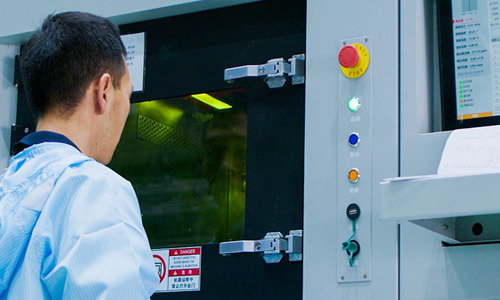
Radium laser with a professional team, rapid response, efficient service to provide users with applications and technical support services.
-
 News
NewsRadium bright laser at any time access to the latest information -- enterprise development, honor information, the latest achievements such.
-
 Marketing Dynamics
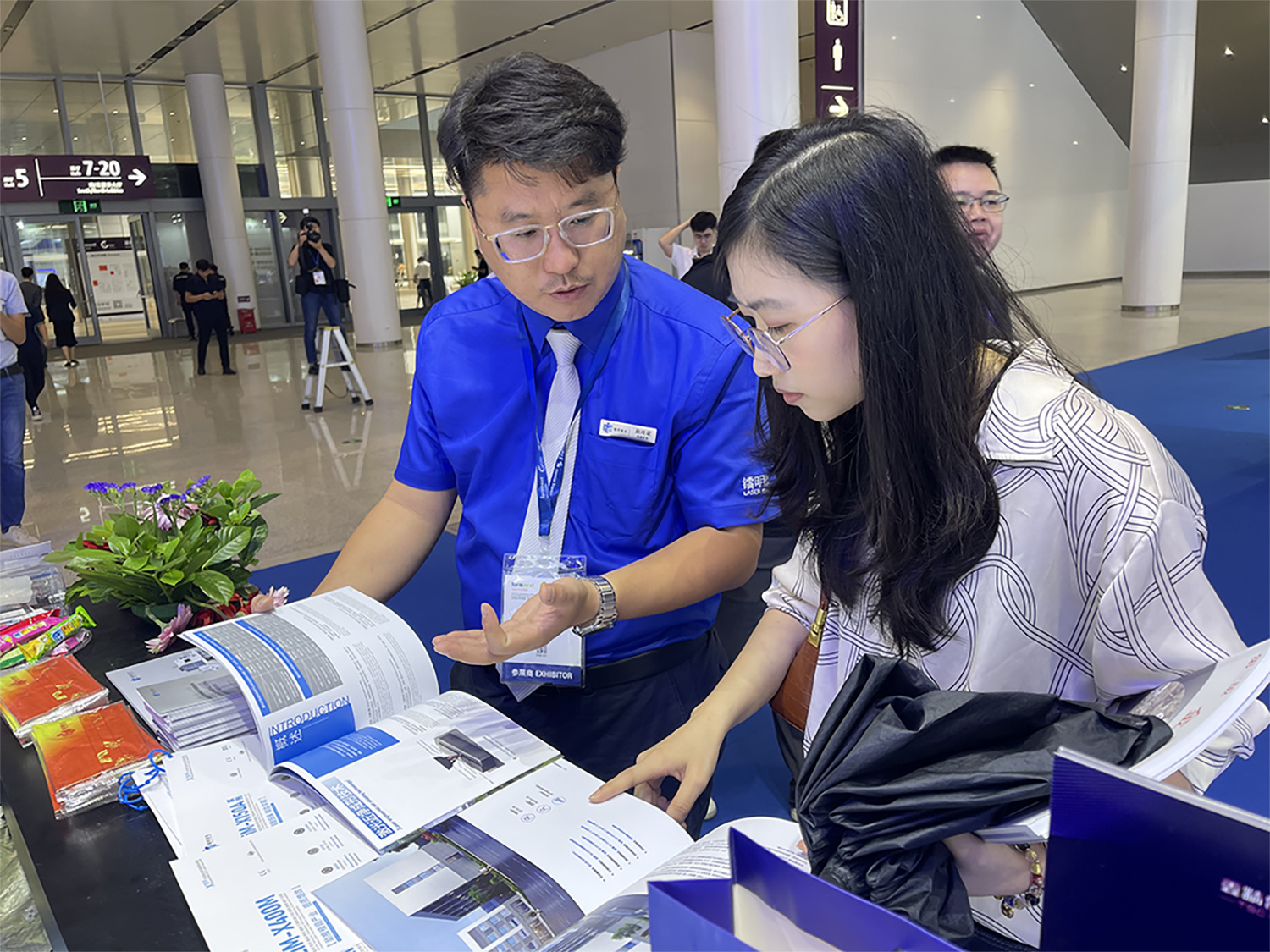
Focus on the industry event and share details of various activities of radium LiM Laser!
-
 Contact Us
Welcome to contact us for more information Tel: 86-022-27914042 18622468793

Multi-modal beam shaping technology enables flexible "on-demand" production.
Author:
Time:2025-09-15
In metal additive manufacturing, lasers serve as the core energy source, and their spot shape directly impacts print quality, efficiency, and material compatibility. While widely used, traditional Gaussian beams concentrate their energy in the center, which can easily lead to localized overheating and insufficient energy at the edges. This results in an unstable melt pool with a concave center and convex edges, limiting print quality and efficiency.
To address this, LiM Laser has introduced beam shaping technology. This technology modifies the laser beam shape to achieve a more uniform energy distribution and optimizes the dynamic behavior of the melt pool through gradient energy input. For example, an annular beam has higher energy density at the edges, preferentially melting powder; while lower energy at the center helps stabilize the melt pool, achieving "gradual melting," effectively avoiding spatter defects and improving part quality.
Dual-effect mode, intelligent switching
LiM Laser's multi-modal beam shaping technology uses a single 1000W laser to intelligently control beam shape, flexibly switching between Gaussian and annular beams for precise control of energy distribution. Users can choose the appropriate spot shape based on their printing needs and material properties:
- Gaussian beam: Suitable for fine contours, thin-walled structures, and other features requiring high-precision forming.
- Annular beam: Suitable for large-volume infill, enabling stable printing at high layer thicknesses, significantly improving printing efficiency while effectively reducing surface roughness issues often associated with thick layer printing.

This technology overcomes the limitations of traditional equipment, which are limited to a single spot shape. It enables flexible "on-demand" production and unprecedented flexibility in printing strategies.
Thick-layer printing, doubled efficiency
The energy non-uniformity of traditional Gaussian beams limits scanning speed and layer thickness options. To ensure edge melting, scanning speeds must be reduced to extend laser action time, resulting in low production efficiency. When printing thick layers, Gaussian beams have difficulty penetrating the entire powder layer, which can easily result in unfused defects. This forces the use of thinner layers, increasing the number of layers and printing time.
The energy distribution of a shaped beam spot (such as a ring-shaped spot) is tailored to the powder layer penetration requirements. High energy in the outer ring rapidly melts the powder surface, while low energy in the inner ring replenishes energy deep within the layer, enabling stable printing of thick layers. A uniform energy field supports higher scanning speeds while reducing remelting areas and shortening single-layer printing time. Beam shaping can increase printing efficiency by approximately 2 times.

Controllable Defects, Excellent Quality
Gaussian beam energy non-uniformity can easily induce defects such as porosity, cracks, and balling. Insufficient laser energy at the edge of the laser leads to incomplete melting of the powder, forming microscopic pores. Thermal stress differences between the central high-temperature zone and the edge low-temperature zone increase the risk of cracking. Fluctuations in the melt pool create a "wavy" surface morphology and increase surface roughness.
The uniform energy input of a shaped beam ensures complete melting of the powder layer, reducing porosity and cracking. It also stabilizes the melt pool morphology and reduces part surface roughness. Adjusting the spot energy distribution can control the melt pool solidification rate, achieving a fine grain structure and improving part mechanical properties.

Multi-material adaptability, multi-application application
Currently, our company has successfully tested annular spot printing in a variety of materials, including stainless steel, titanium alloy, and aluminum alloy. By employing a large-layer printing strategy and utilizing larger line spacing, we significantly improve production efficiency while maintaining excellent quality, accelerating the implementation of large-layer-thickness mass production.

This technology will further promote high-quality and efficient mass production of complex structural components in fields such as aerospace, automotive manufacturing, and precision molds.
The introduction of LiM Laser multi-modal beam shaping technology resolves the long-standing efficiency-quality conflict in metal 3D printing and will further promote the transformation of metal 3D printing from "single-mode" to "flexible intelligent manufacturing."
Going forward, we will continue to deepen our research and expand the application of beam shaping technology, providing more flexible, integrated metal 3D printing solutions to help users achieve high-precision, high-efficiency, and high-performance large-scale manufacturing.
Related Articles
Market Activity

